
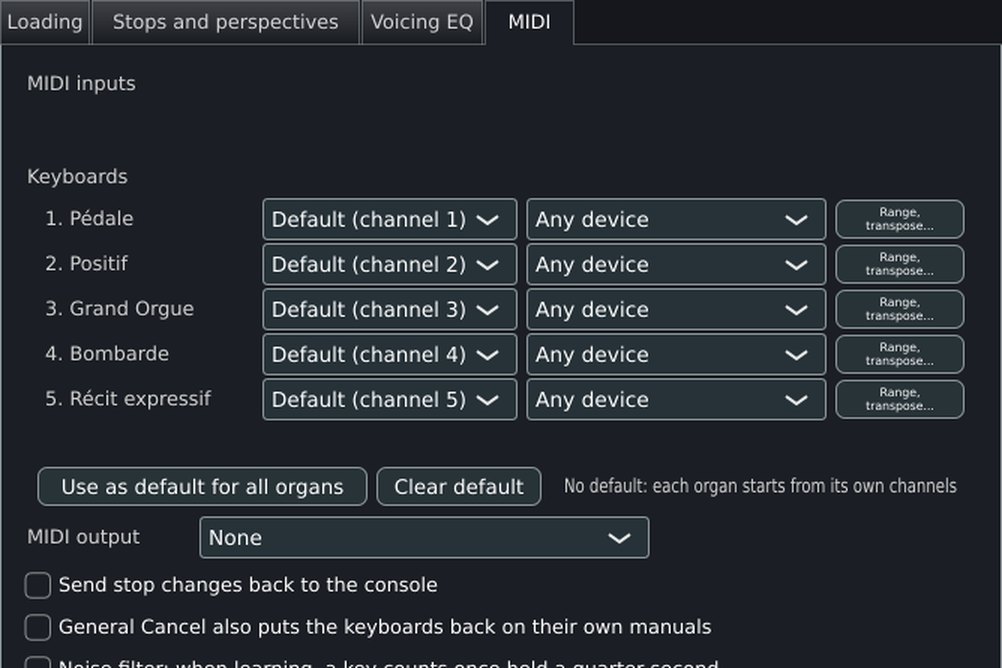
Your keyboards and pedals.
A channel per manual, key range, transposition, velocity window, short octaves and debounce; MIDI learn for every control, drawstop lamps and jamb displays.
Masterpiece, the player for the two main sample-set formats, Hauptwerk and GrandOrgue: each organ's own console, wiring, wind and swell boxes on a vector-optimised engine, from Windows and macOS to a Raspberry Pi and an iPad.
Release notes
Definitions, consoles and packages of both formats, read as they ship.
Three to five times the rendering speed at 512 voices.
Windows, macOS, Linux, Raspberry Pi, Android and iOS.
Each set loaded, played on every keyboard and its console pages checked.
Hauptwerk-format and GrandOrgue sample sets with their own consoles and wiring, read straight from the packages they ship in.
Full, compact and composite XML, with every console page, jamb and console size the set draws.
.organ definitions converted as they load, console included.
Both formats from an unpacked folder or straight from what they ship in: RAR 4 and 5, solid, multi-part and multi-volume, and GrandOrgue .orgue packages. WAV and WavPack samples at any rate.
Couplers, sub- and super-octaves, unison off, reversibles, crescendo and alternate ranks.

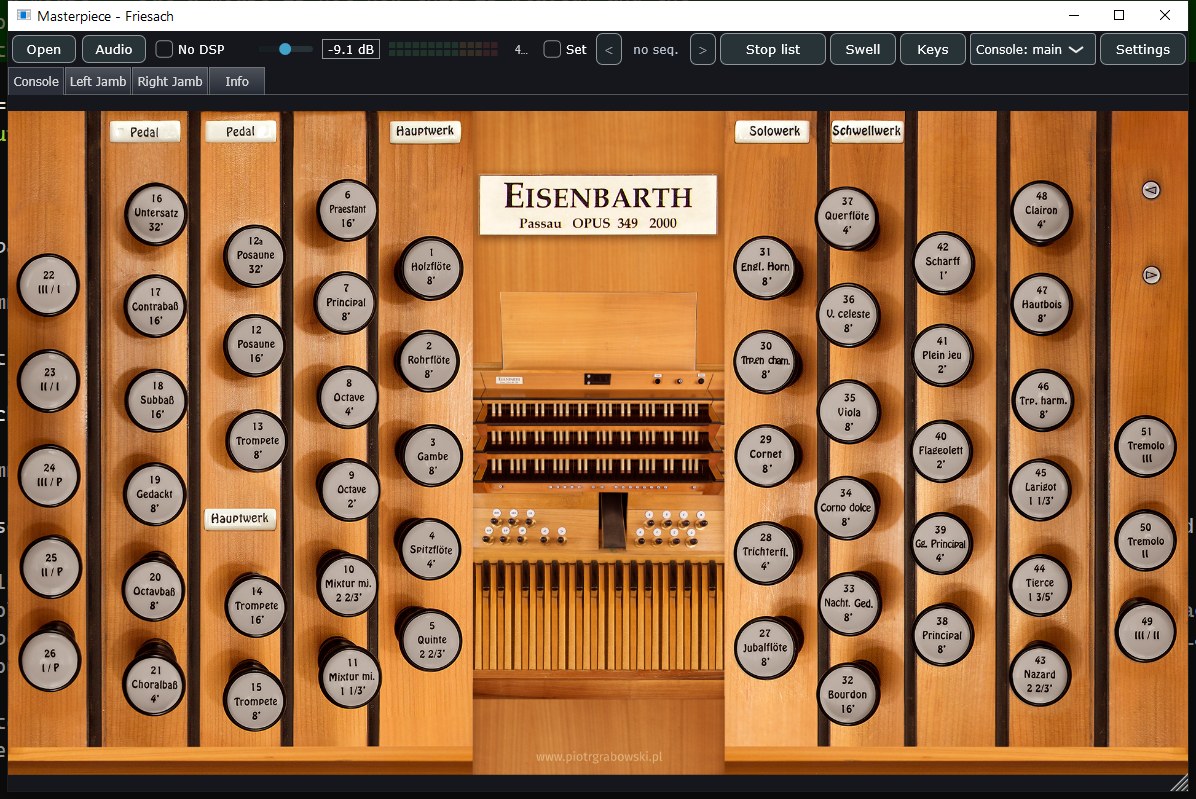
Friesach.Organ_Hauptwerk_xml
Friesach.organFriesach · one organ, both of its releases, the same console · Piotr Grabowski
Hand-written AVX2, SSE2 and NEON kernels for every voice, on by default on every processor that has them.
AVX2 rendering speed
Memory, releases streamed
Faster than real time, virtuoso test
| Vector code | AVX2, SSE2 (x86), NEON (ARM, Raspberry Pi) |
| Release selection | By key hold time, crossfaded from the sustain loop |
| Wind model | Chests, bellows and valves as one coupled system; pitch and level follow the pressure |
| Enclosures | Level and treble shelf to the set's stated depth |
| Tremulants | Amplitude and pitch modulation per chest and per pipe |
| Interpolation | Hermite (Catmull-Rom) |
| Polyphony | 725 voices a processor thread by default, up to 16,384; the longest-fading releases give way first |
| Release tails | Ended below hearing, −90 dB by default4 |
Organs assembled from the pipework of several sets, such as Augustine's Jehmlich and Zamárdi-Buda composites, each set read from its own archive.
The composite's folder, your package folder and your sample libraries.
An archive or folder chosen once, and remembered for every later load.
Key action, stop action and blower noises made by Masterpiece.

Up to three split points, each zone on a manual or the pedal, with a layered second manual, its own octave and transposition, and the pedal from the lowest key held.

A channel per manual, key range, transposition, velocity window, short octaves and debounce; MIDI learn for every control, drawstop lamps and jamb displays.
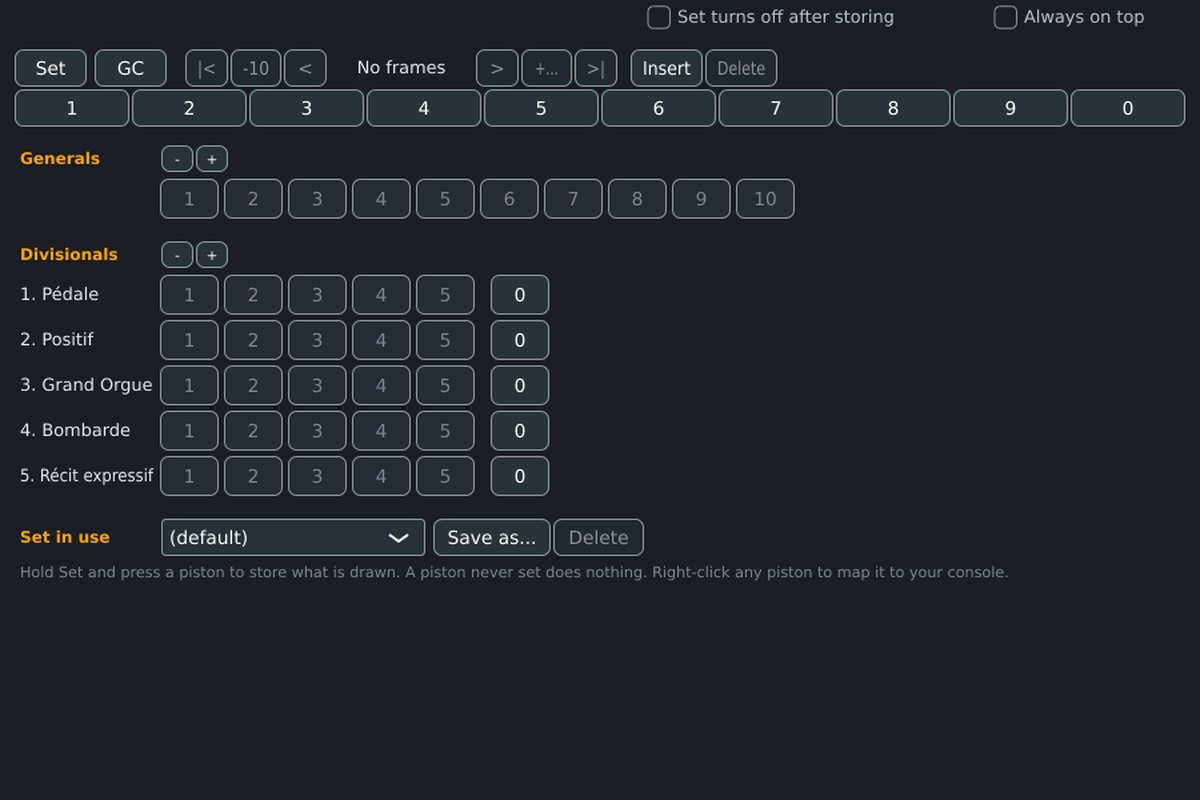
Up to 100 generals, divisionals per manual, general cancel and a 999-frame sequencer, in named combination sets.
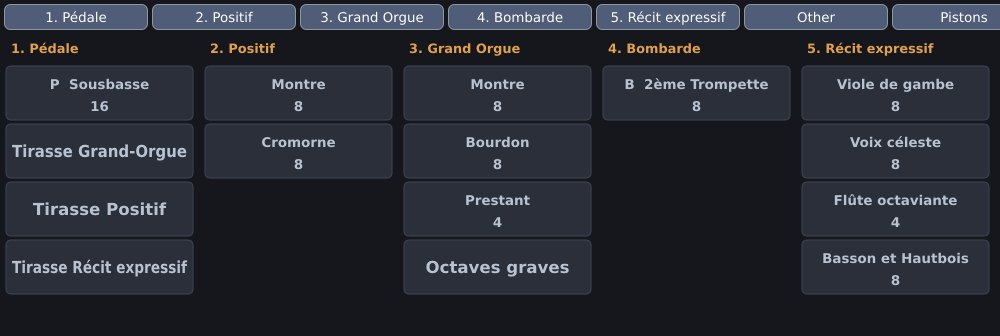
Stops grouped by division, for sets drawn across many jambs, any page in its own window, and automatic portrait layouts.
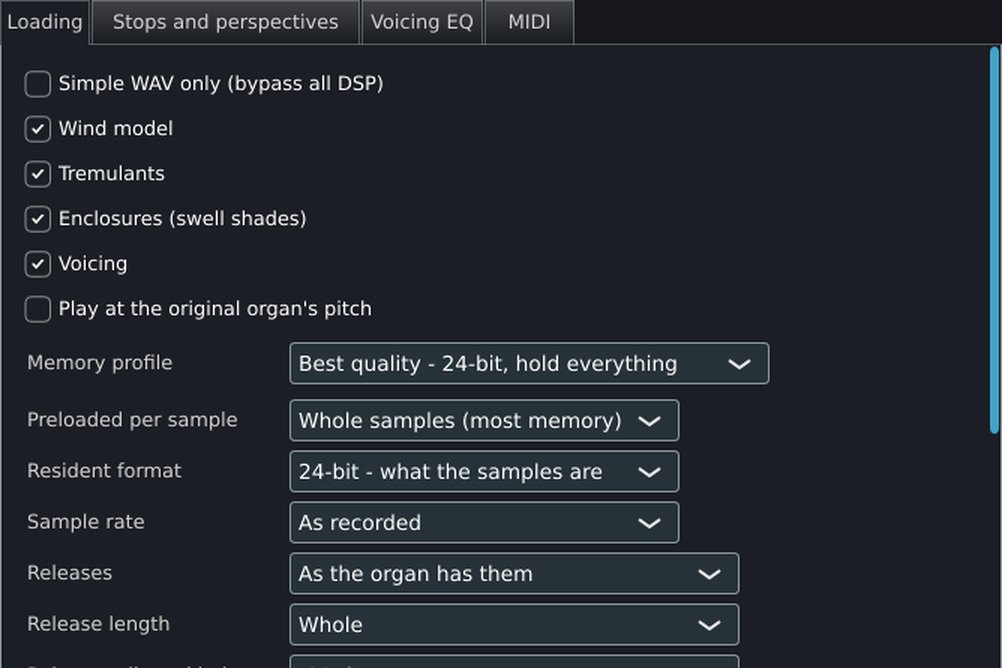
24 or 16 bits, mono folding, streamed release tails, a sample cache and a memory limit, per organ or as defaults.
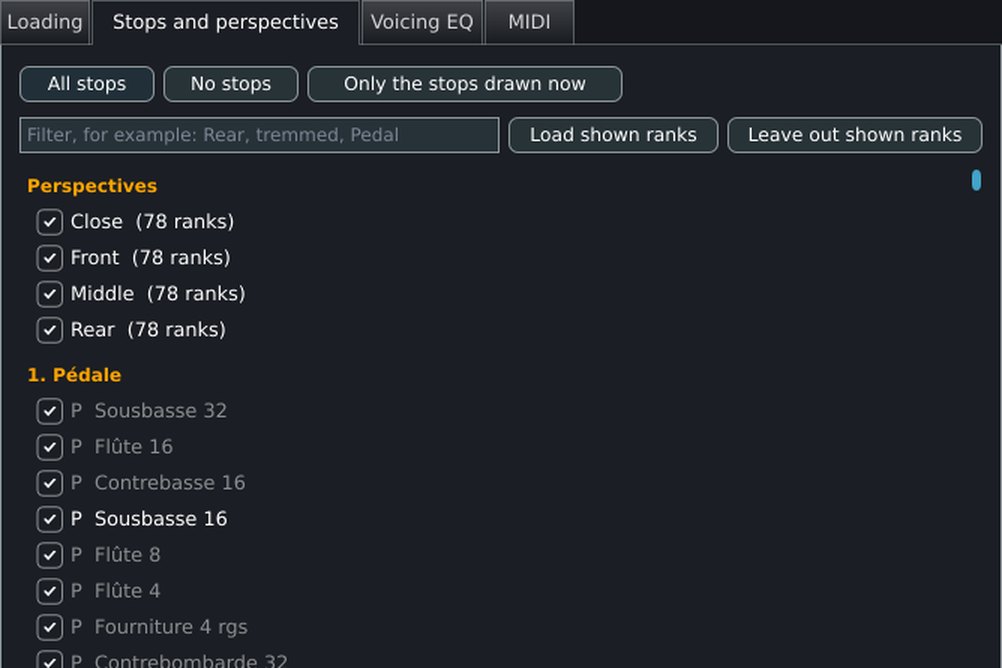
Any stop, rank or microphone perspective left out of a load, for the largest sets on smaller computers.
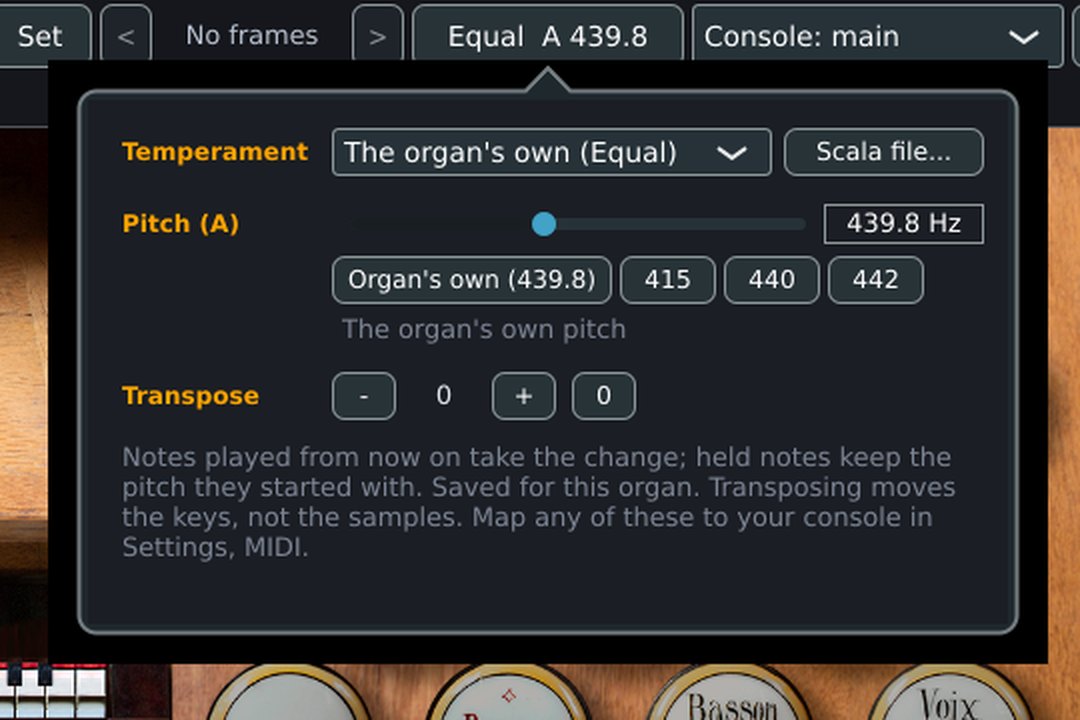
The organ's own tuning, nine historical temperaments, Scala files, any pitch for A and ±12 semitones.
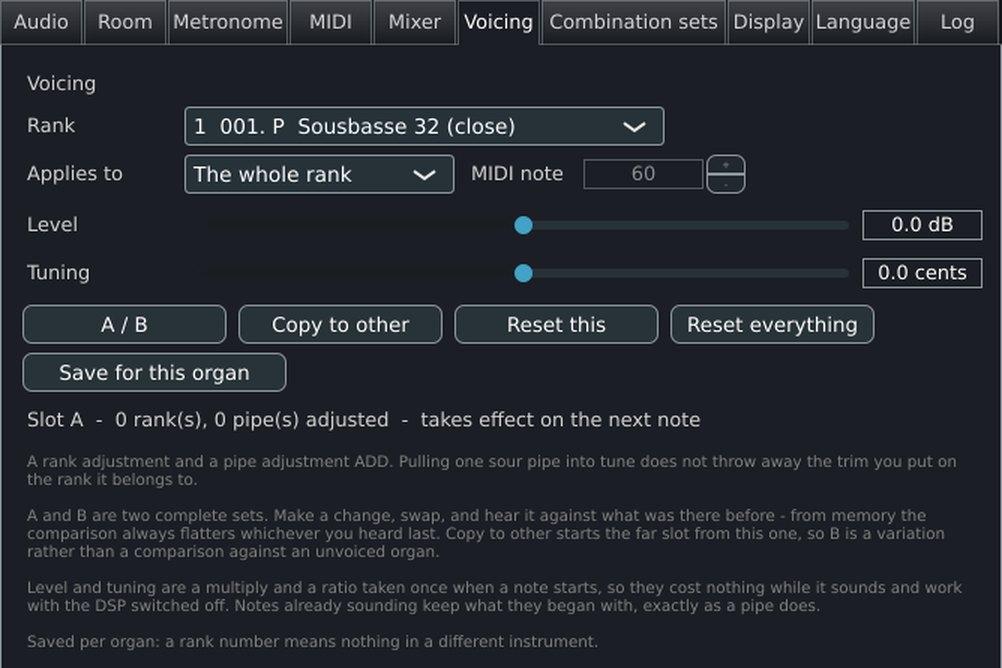
Level and tuning for every rank and pipe, with two voicing sets for A/B comparison.
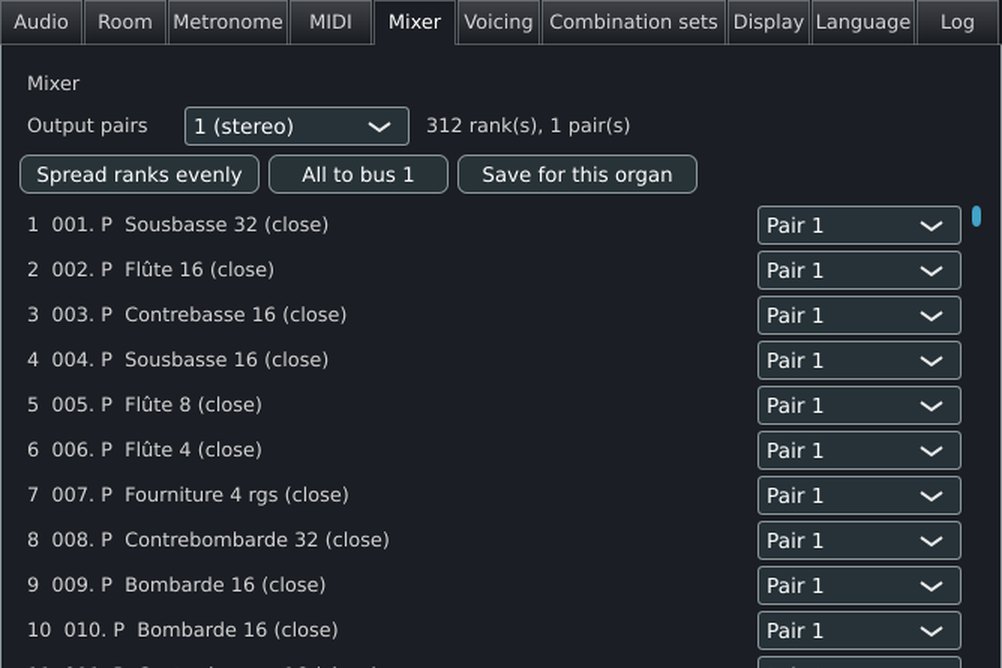
Ranks sent per organ to up to eight stereo outputs, and convolution reverb for sets recorded dry.
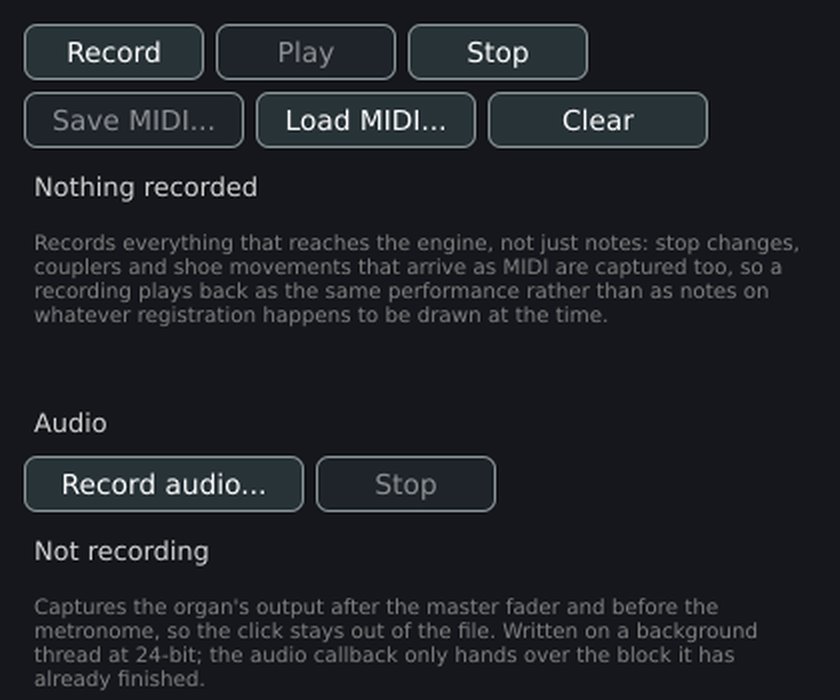
Performances with every stop and shoe movement, replayable under another registration; audio takes and a metronome.
Windows shown with Nancy · Piotr Grabowski
Samples held at 24 or 16 bits or folded to mono, release tails streamed from disk, and a sample cache for every later opening.
Less memory, at 16 bits and in mono with releases streamed
Faster opening from the sample cache
Loading settings kept with each set
| Samples | Release tails | In memory | Streamed from disk | Opening |
|---|---|---|---|---|
| 32-bit float | In memory | 21.6 GB | – | 77 s |
| 24-bit | In memory | 16.2 GB | – | 56 s |
| 24-bit | Streamed | 7.0 GB | 8.9 GB | 29 s |
| 16-bit | Streamed | 4.65 GB | 5.9 GB | 28 s |
| 16-bit, mono | Streamed | 2.33 GB | 3.0 GB | 26 s |
Measured on a 16 GB Windows PC. A streamed tail keeps its first second in memory and reads the rest from disk as it plays. From the sample cache, the organ reopens in 18.9 s.
Seventeen minutes on nine organs, recorded from Masterpiece's audio output. Organs and programme
Twelve minutes on fifteen organs, filmed from the running console. Organs and programme
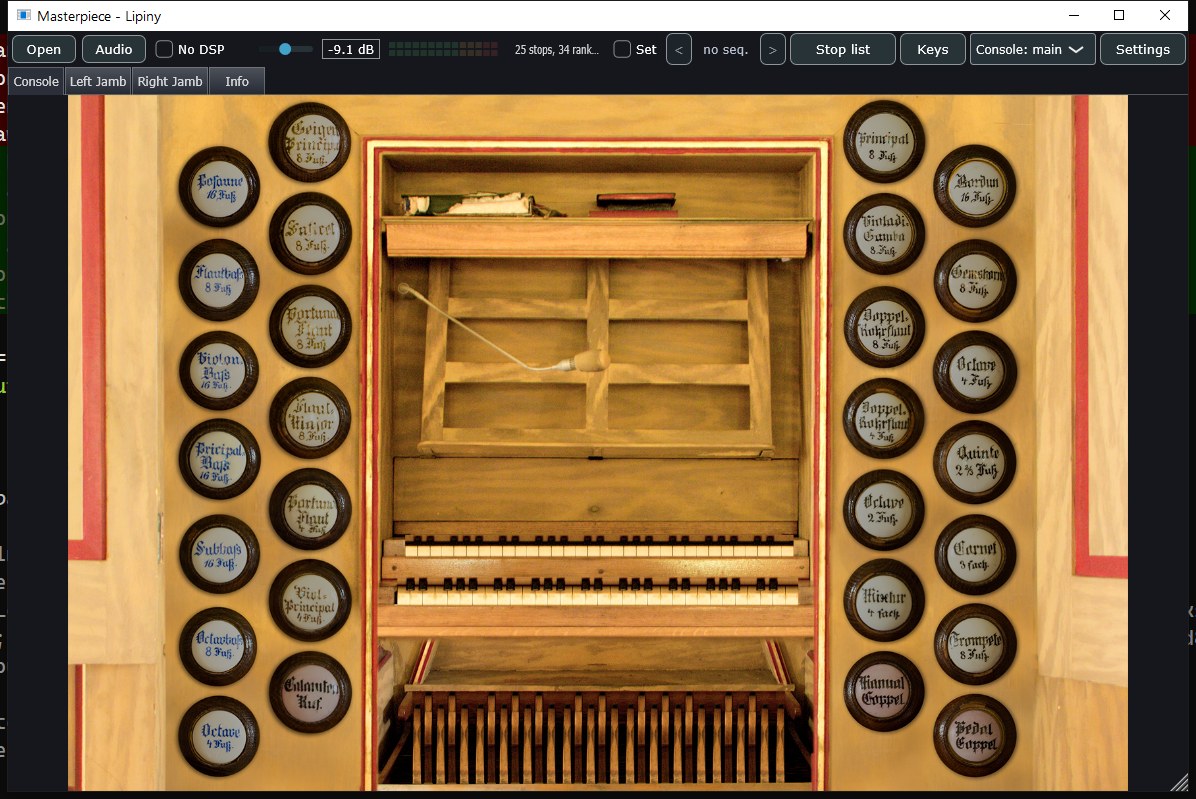
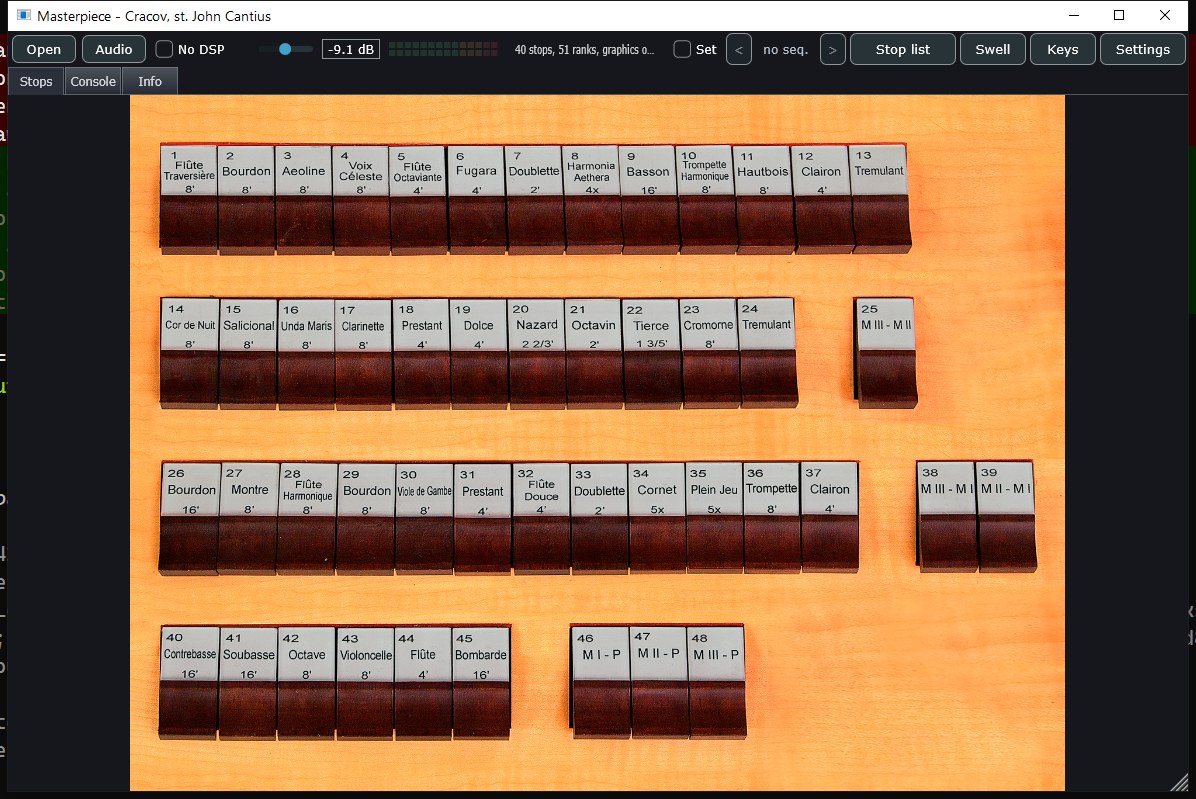
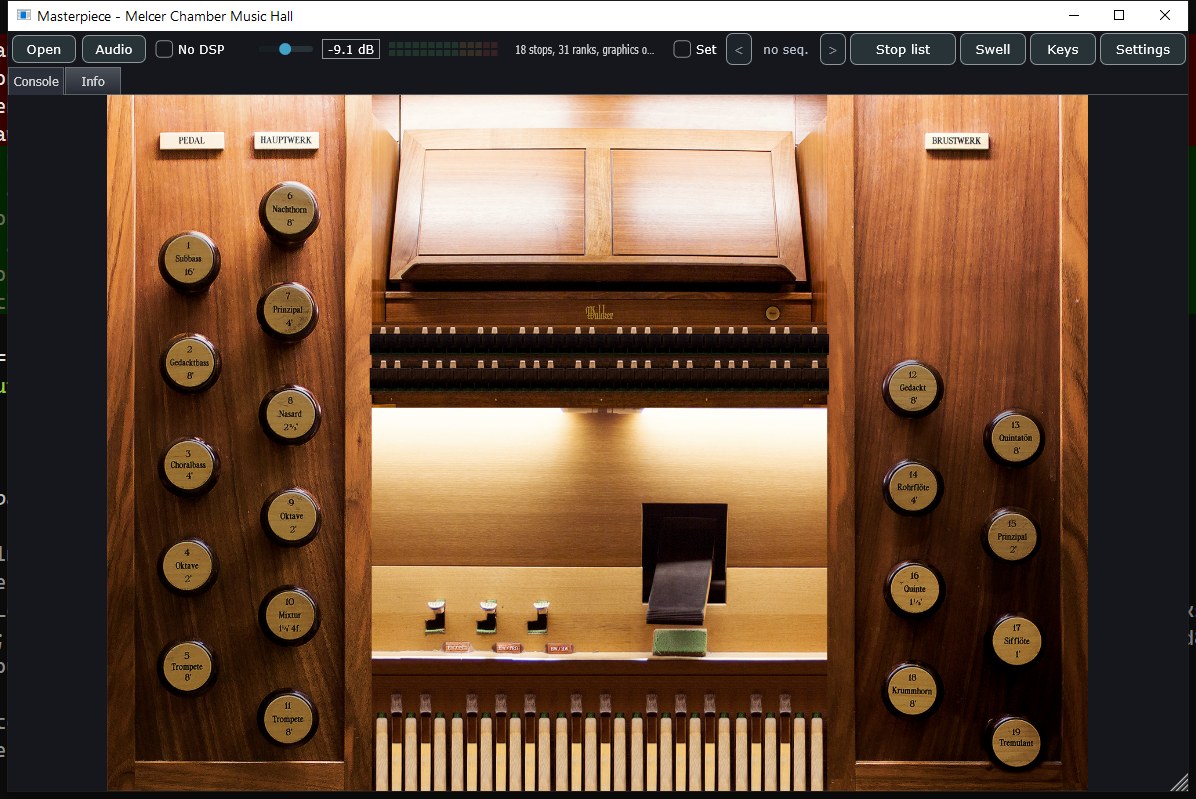
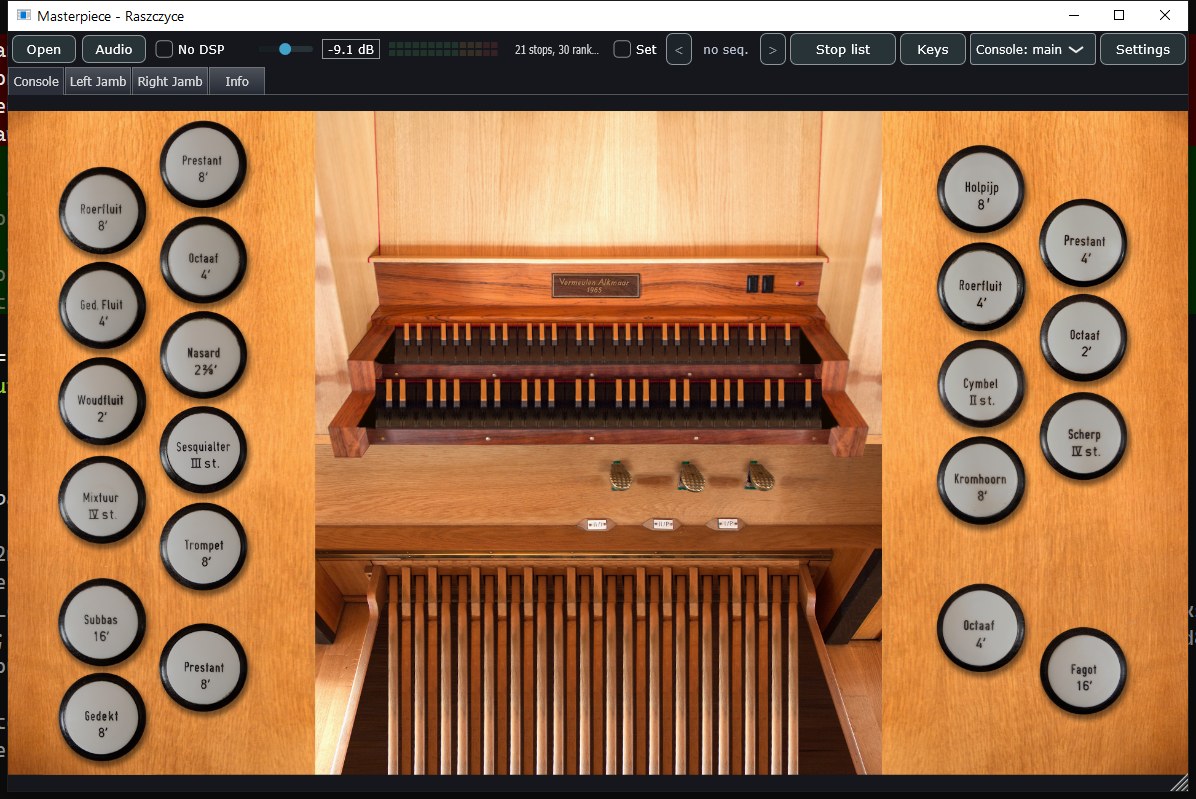
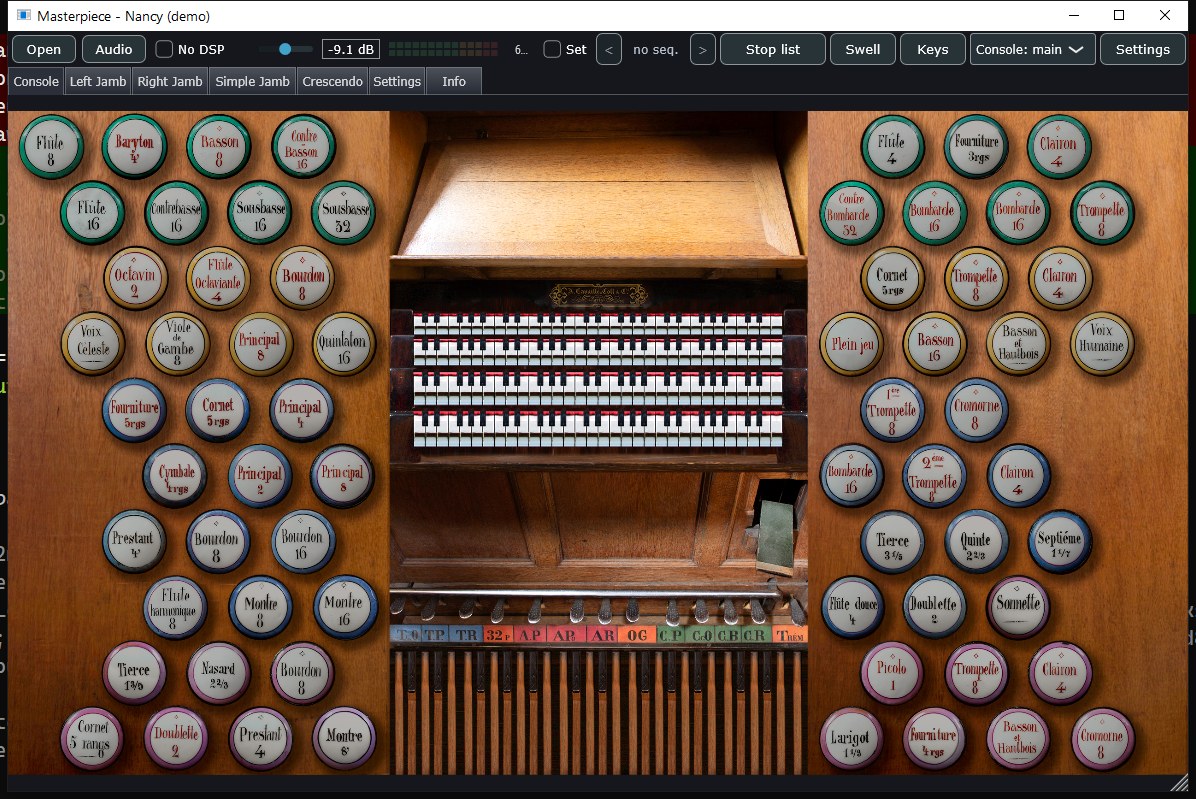
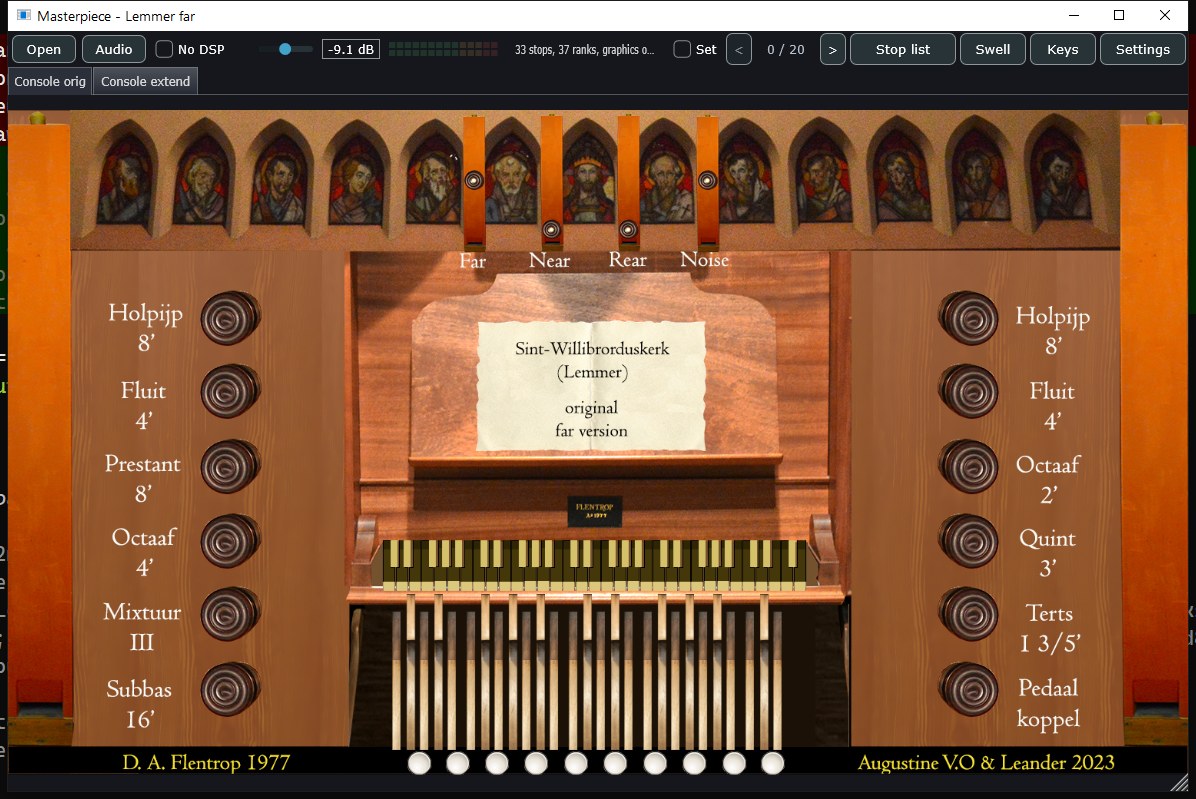
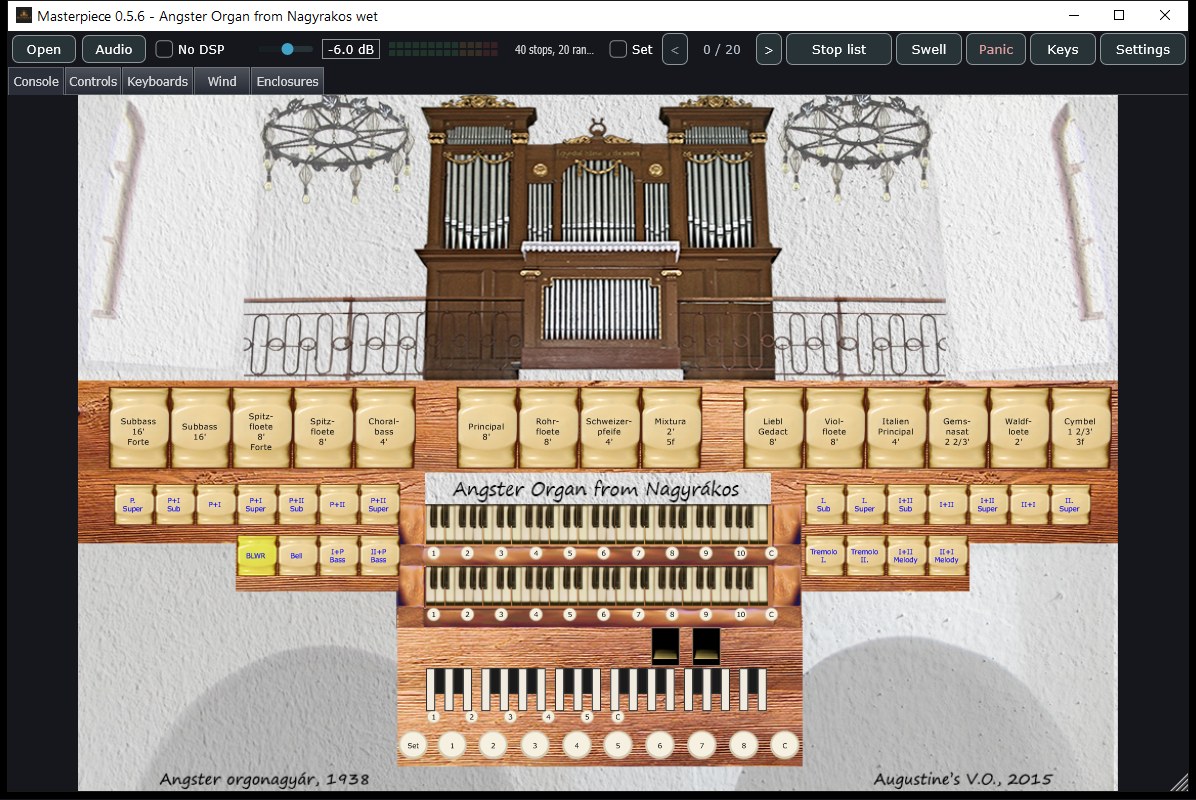
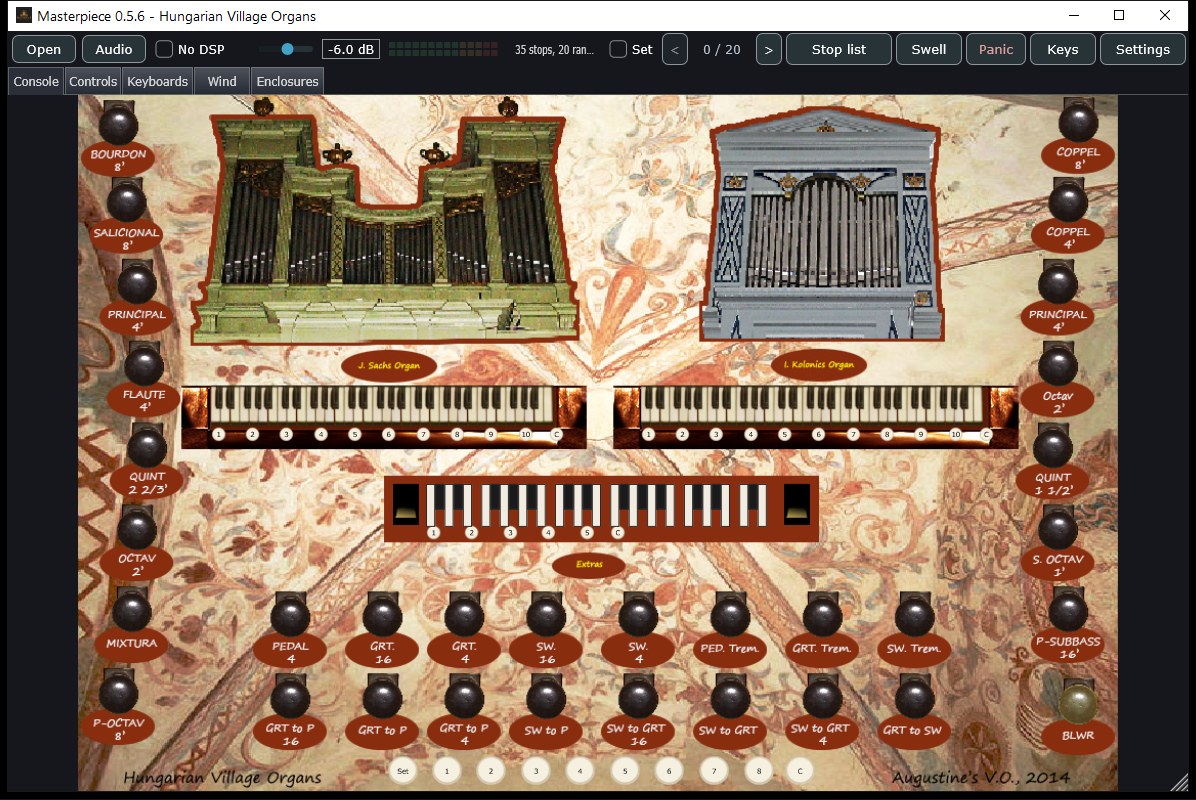
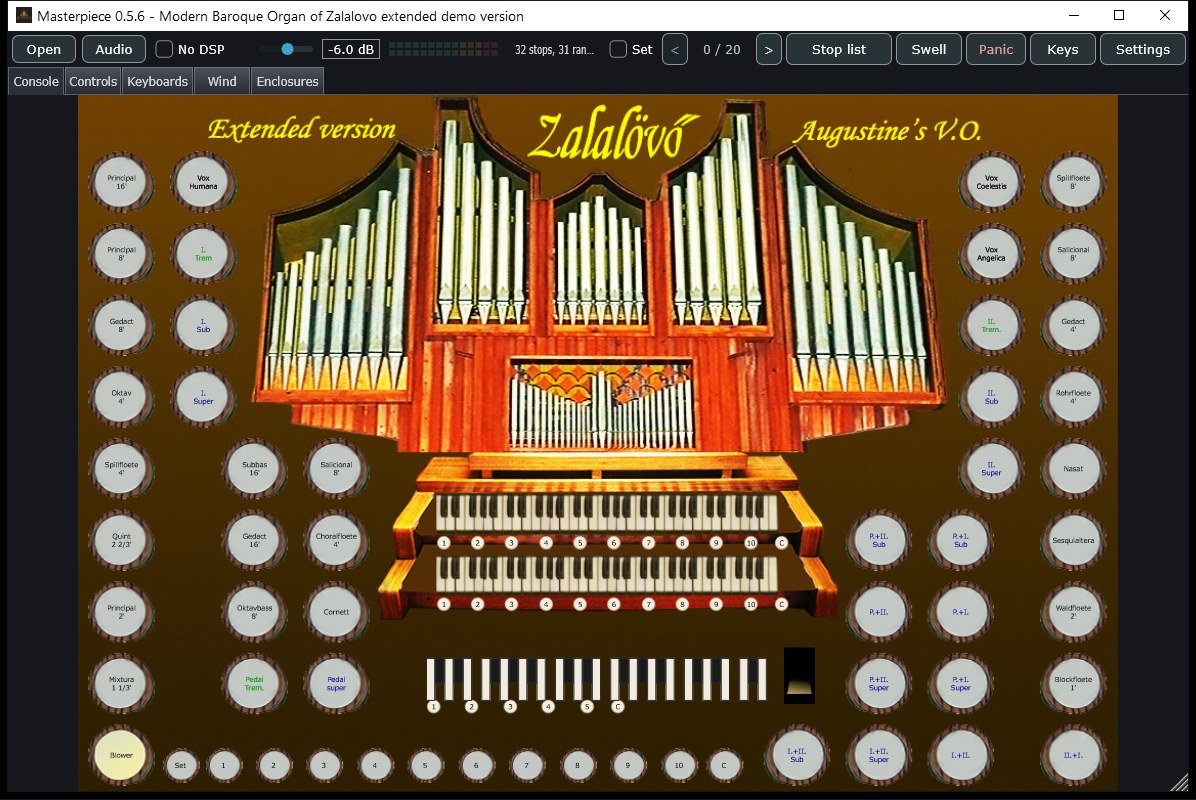
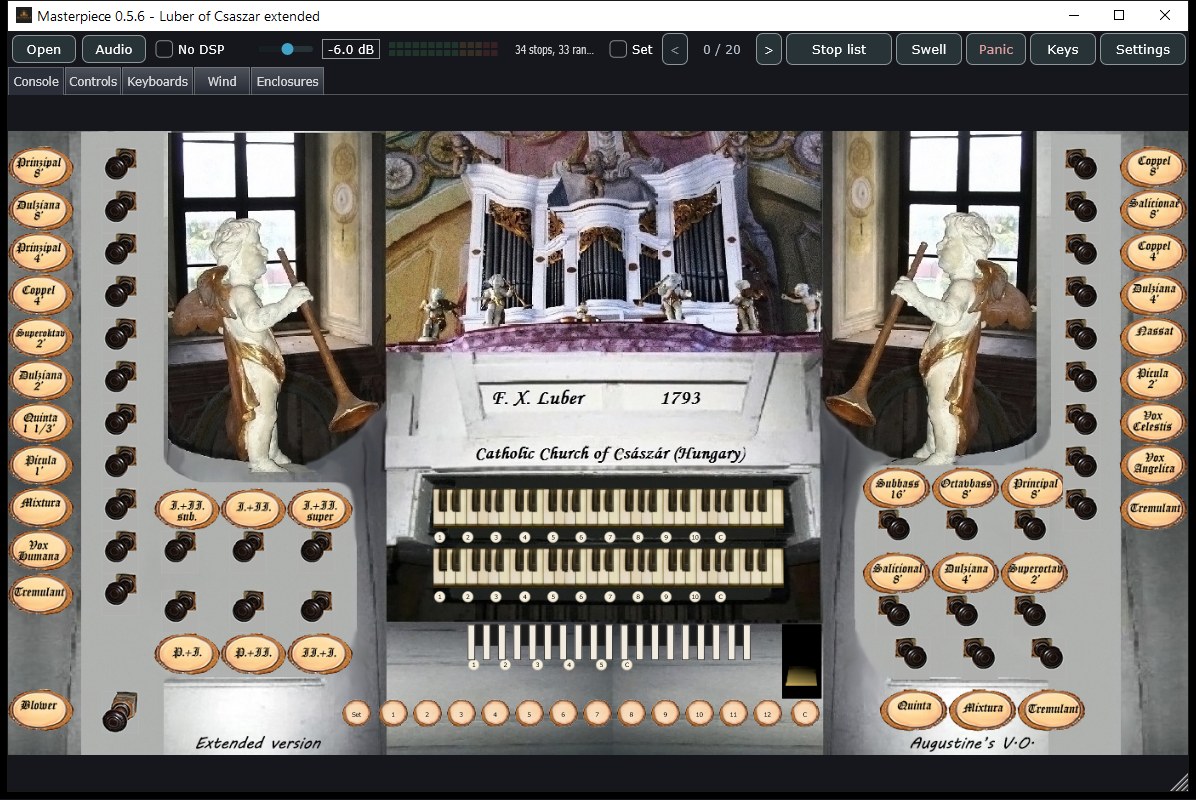
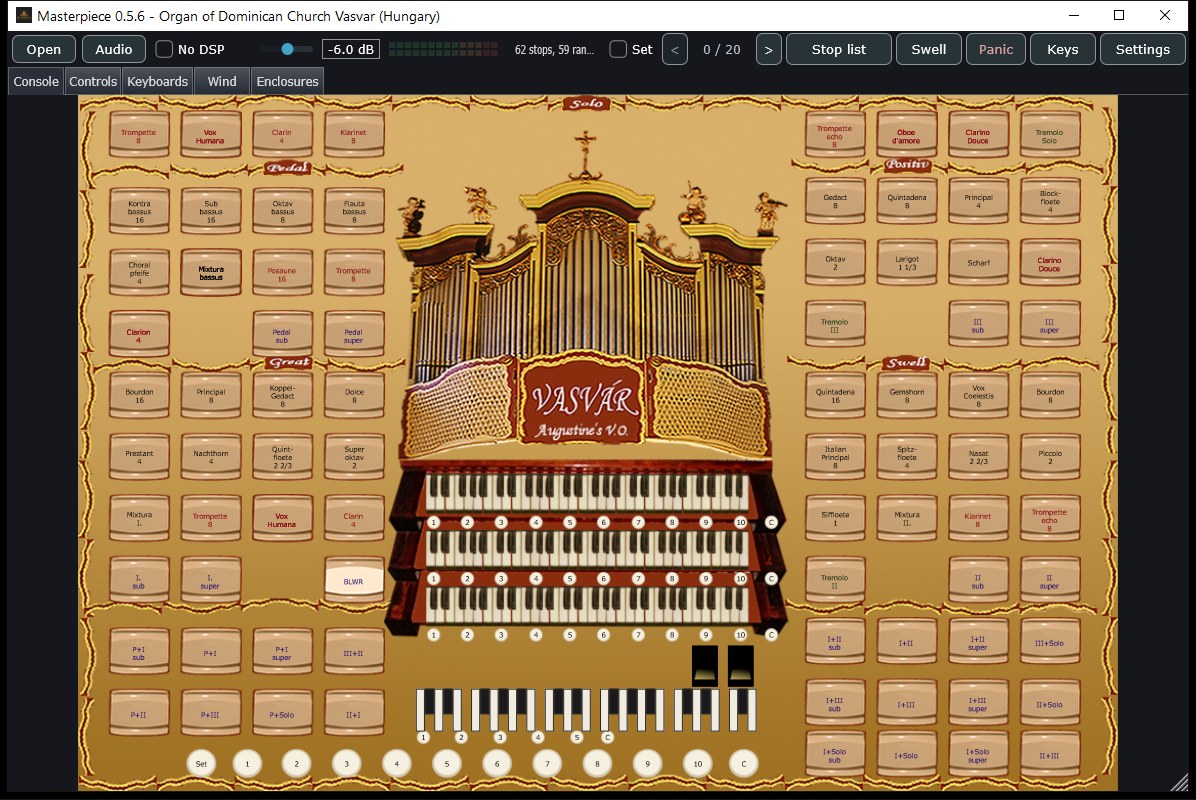
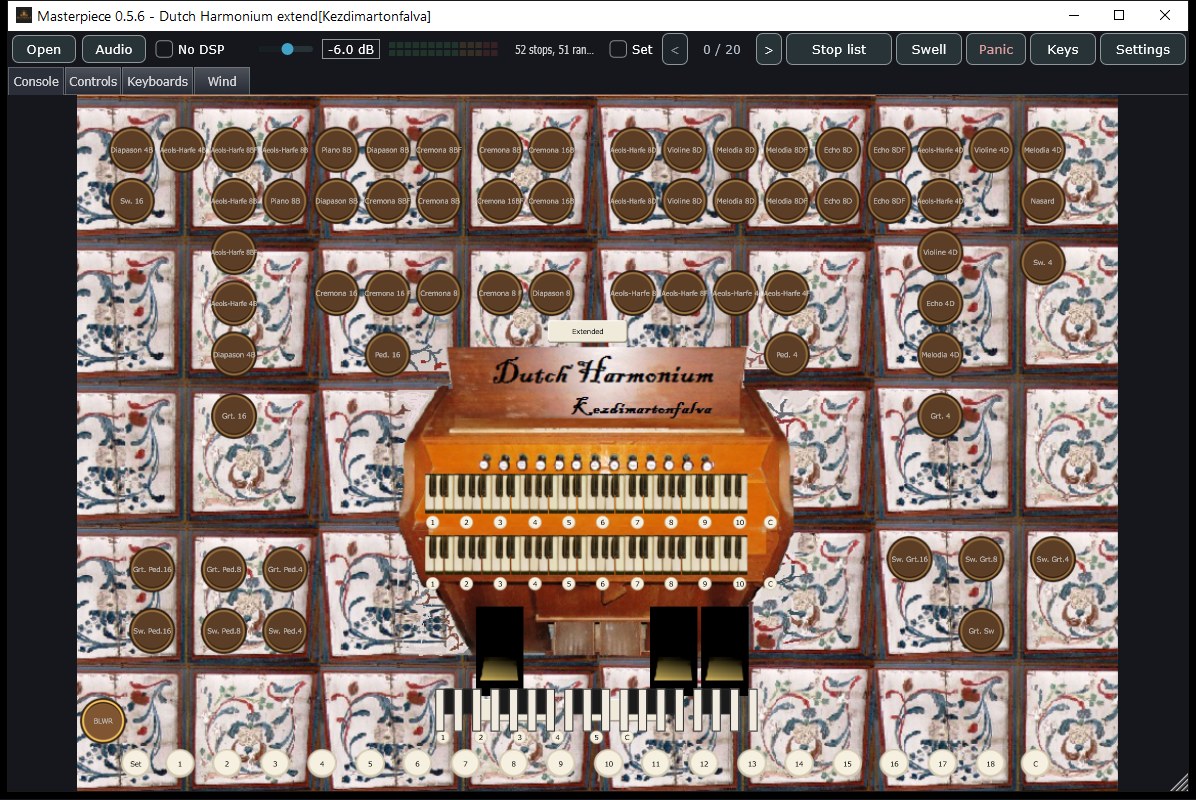
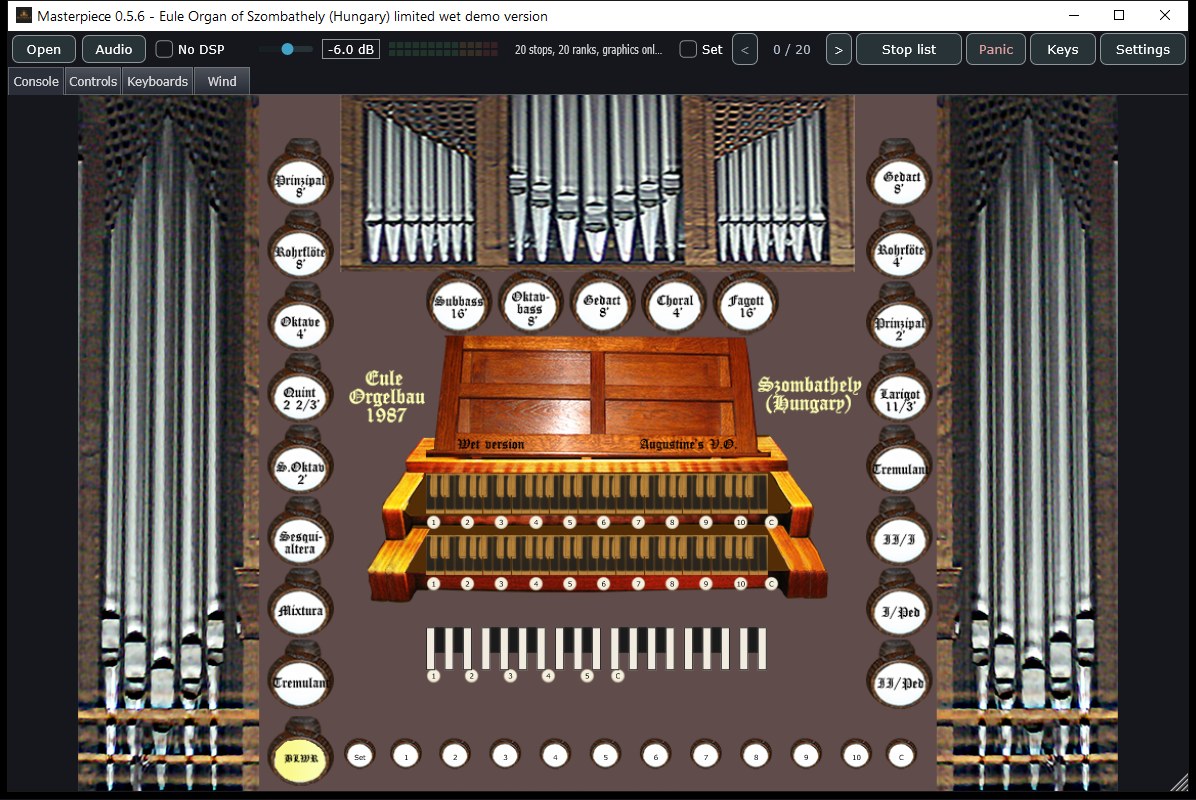
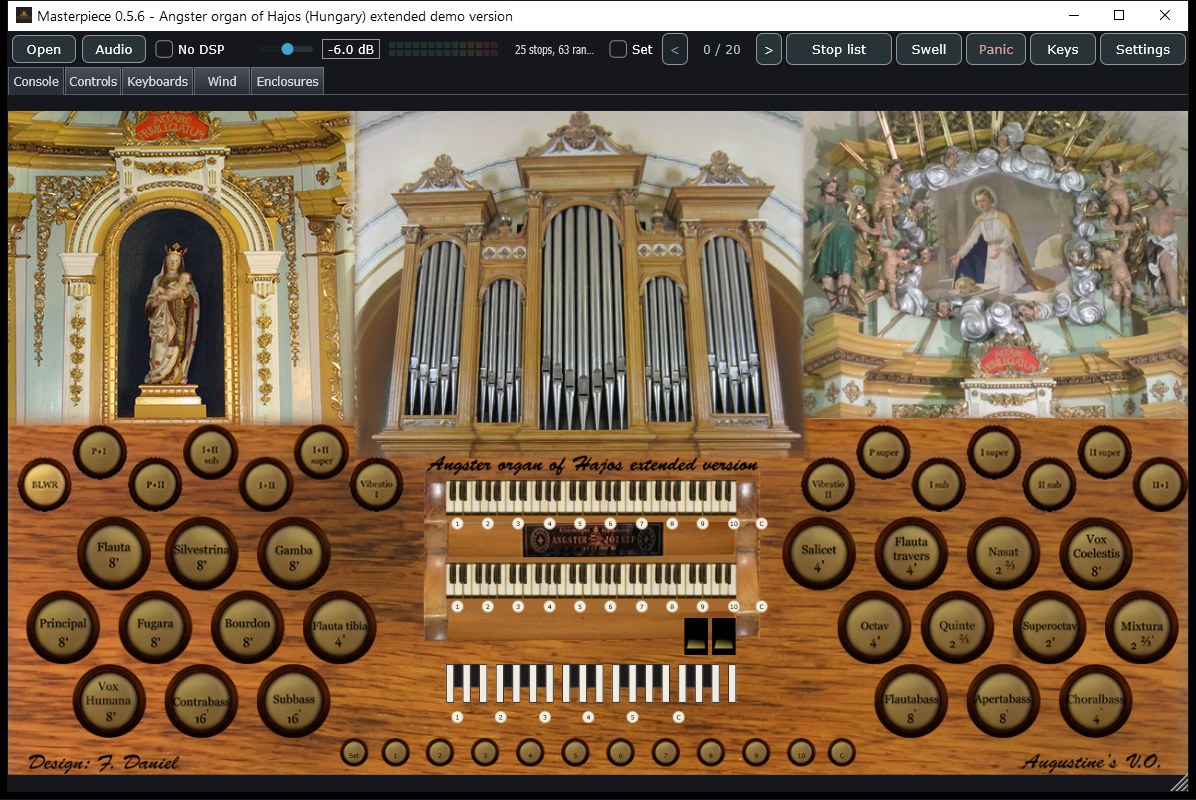
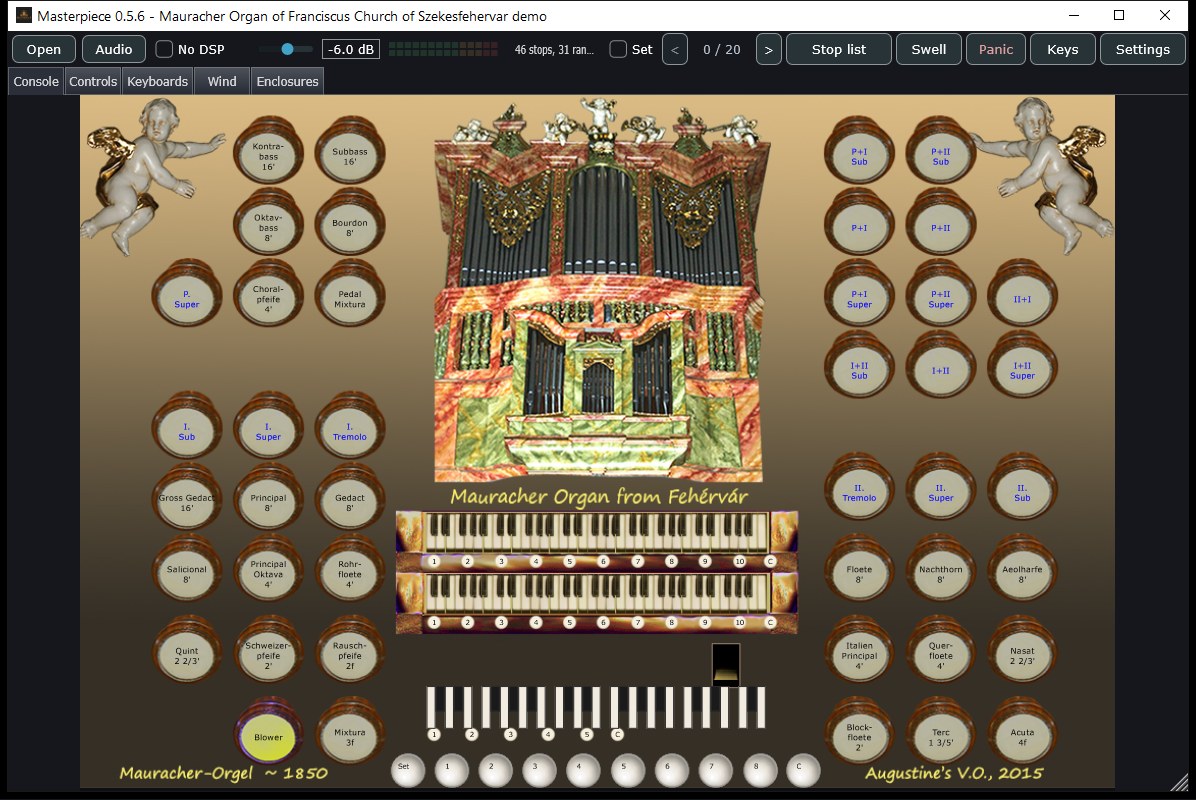
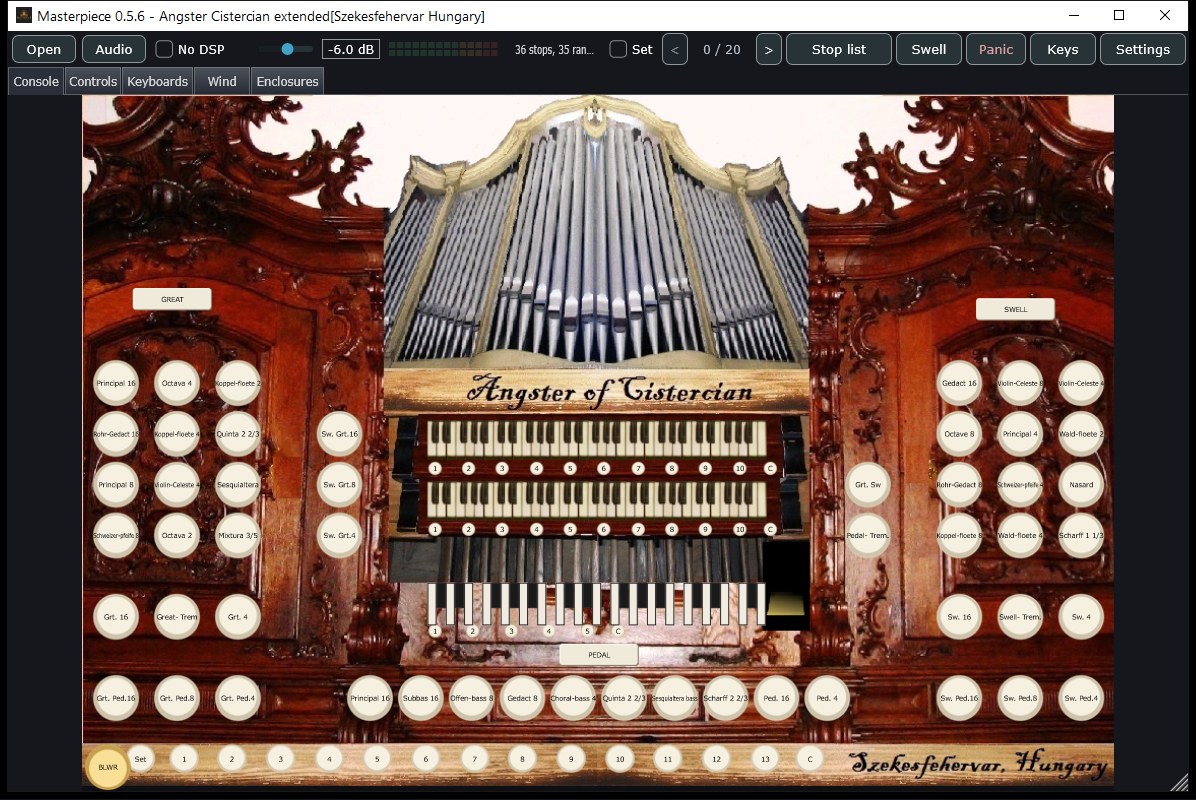
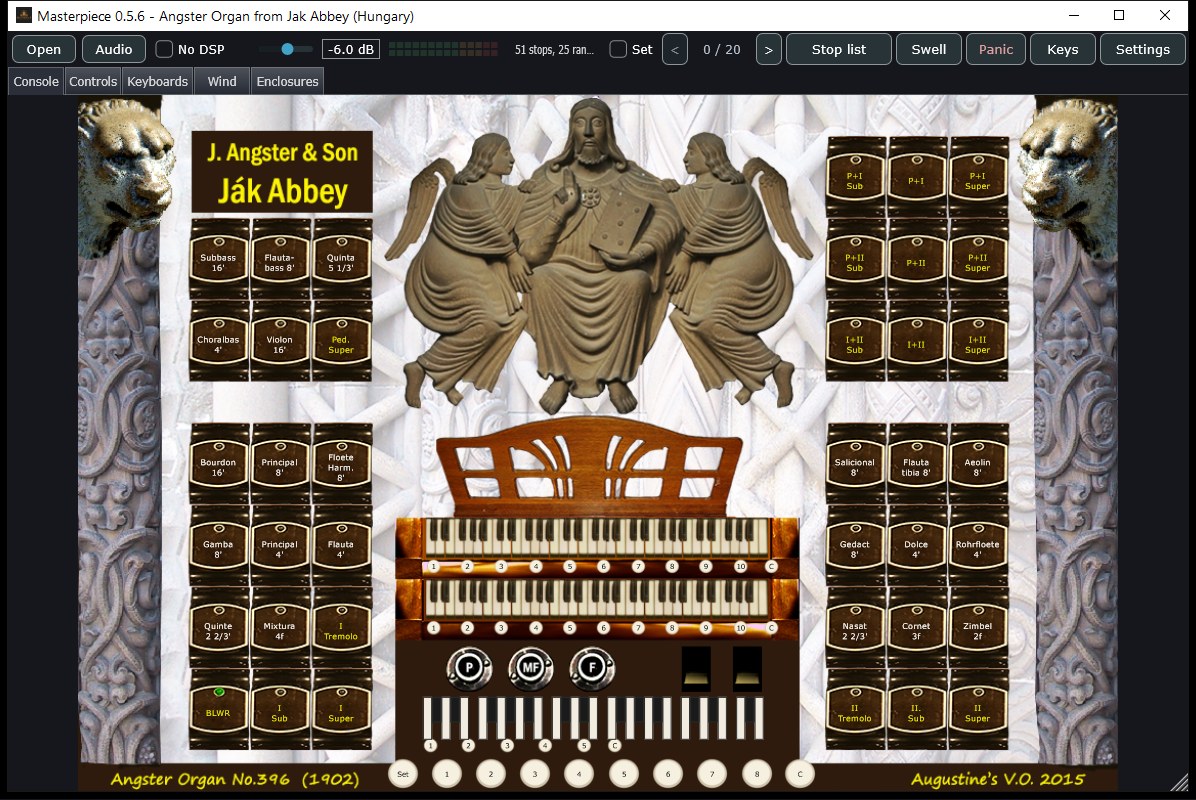
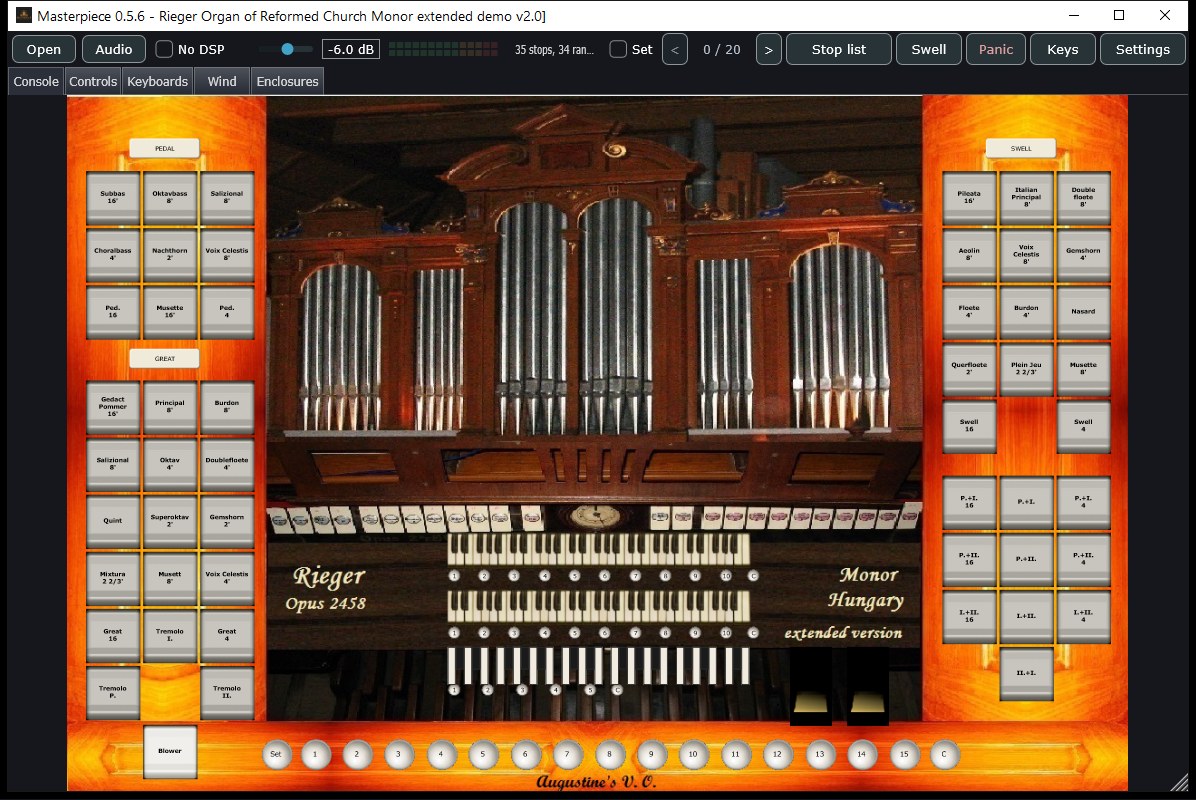
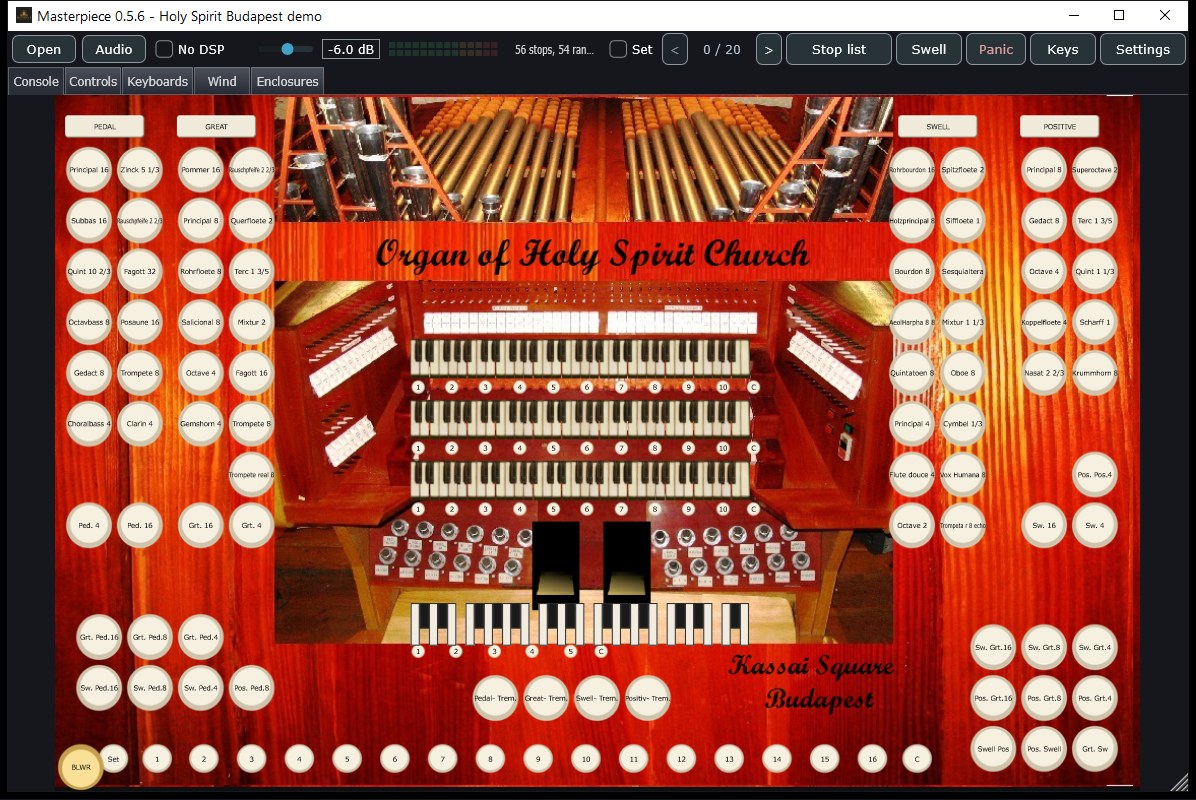
One code base for every platform and plugin format, built with CMake and tested on every pull request.
Platform dependencies| Language | C++20 |
| Framework | JUCE 9 |
| Build system | CMake 3.22+, Ninja; dependencies fetched at configure time |
| Compilers | MSVC 2022, GCC 12+, Clang 14+ |
| Targets | Windows x64; macOS arm64, x86_64; Linux x86_64, arm64, armhf, Flatpak; Android; iOS |
| Formats | Standalone, VST3, LV2, AU |
| Licence | GPL-3.0-only |
Windows, macOS, Linux, Raspberry Pi, Android and iPad, each a direct download.
OpenPipes OS, a 64-bit Linux tuned for real-time organ audio on a Raspberry Pi or a PC; Pipe2C hardware modules for stop tabs, pistons, draw knobs and pedals, chained on one I2C bus; 3D-printed controls to complete them, from the modules' housings to toe pistons; and ready-made console plans with the Organ Designer, a custom console builder with parametric CAD models, cut lists and drawings as its output.